When Stories Teach Children to Care for the World
Children often learn their most important lessons long before they realize they are learning at all. These lessons do not always come through direct instruction or formal education. Instead, they are absorbed through stories, experiences, and the small moments of wonder that shape childhood. Among the most powerful lessons children can learn early in life is the understanding that the world around them matters: that animals, forests, rivers, and ecosystems are not simply scenery but living parts of a shared home.
As environmental concerns become more pressing across the globe, educators and parents alike have begun to emphasize the importance of teaching children about environmental stewardship. Yet explaining complex ecological ideas to young minds can be difficult if approached purely through facts and statistics. Children respond far more deeply to emotion, imagination, and narrative than to lectures about sustainability.
This is where storytelling becomes incredibly valuable. Stories have the ability to translate large and sometimes overwhelming ideas into experiences that feel personal and meaningful. Through narrative, children are able to witness the consequences of environmental neglect and the beauty of ecological harmony in ways that are both engaging and memorable.
When a forest is portrayed not just as a location but as a community of living beings, children begin to see nature differently. Trees are no longer silent background objects but part of an interconnected world filled with life and meaning. Rivers become more than flowing water; they become lifelines supporting animals, plants, and ecosystems that depend upon them.
Stories also create emotional connections. When animals speak, express fears, or share hopes, young readers develop empathy for them. This empathy encourages respect for wildlife and nurtures a sense of responsibility toward the natural world.
Imagination further strengthens this connection. Magical adventures set in forests, mountains, or oceans allow children to explore environmental ideas through wonder rather than worry. The magical elements draw them into the story while the underlying message quietly plants seeds of awareness.
Another reason storytelling is so effective is that it empowers children. Instead of feeling helpless in the face of environmental challenges, young readers encounter characters who take action. These characters demonstrate that even small acts of care can lead to meaningful change.
For children, seeing someone their own age helping the environment can be incredibly inspiring. It reminds them that they are not too young to make a difference and that compassion and creativity are powerful tools.
In addition, stories about nature often encourage curiosity. Children who read about forests, rivers, and wildlife may become more interested in exploring the outdoors themselves. A walk through a park, a visit to a lake, or even a rainy day outside can become an opportunity to observe the living world more closely.
This sense of curiosity often grows into appreciation, and appreciation frequently leads to protection. When children care about the natural world, they become more likely to respect and protect it as they grow older.
Modern children’s literature increasingly recognizes the importance of this connection between storytelling and environmental awareness. Writers are crafting narratives that celebrate nature while gently encouraging young readers to think about their role in protecting it.
One particularly enchanting example of this approach can be found in Leslie’s Magic Rainboots: A Tale of Adventure and Wonder by Laurie Perreault.
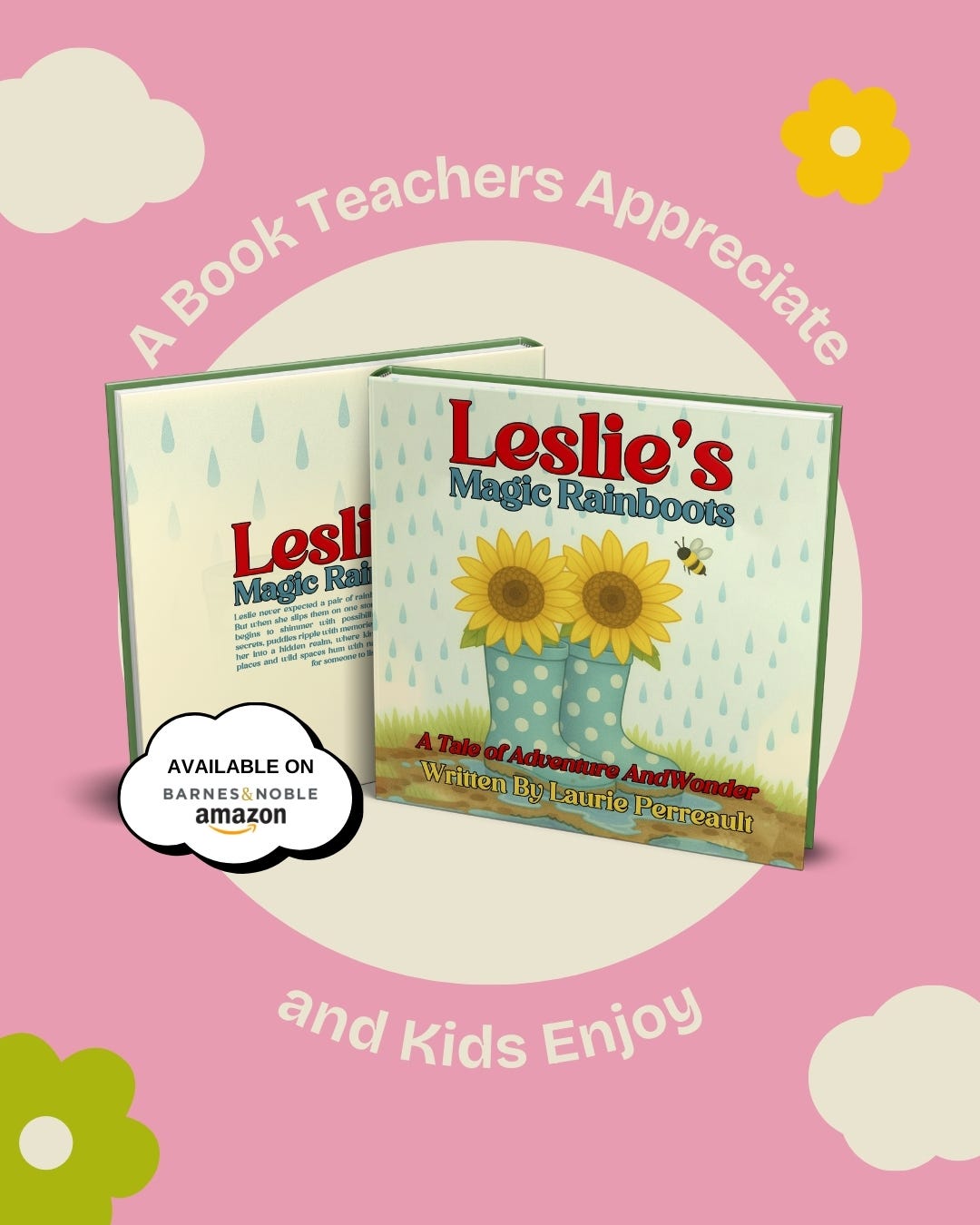
The story follows Leslie, a curious young girl who loves rainy days and the bright blue rainboots passed down through generations of her family. These boots, however, hold a secret: they are magical. When Leslie splashes into a puddle, she is transported into a fantastical world where animals speak, and nature itself seems alive with memory and emotion.
In one of her earliest adventures, Leslie arrives in a forest where the animals are struggling because their river has mysteriously stopped flowing. Frogs, salamanders, otters, and birds all describe how the disappearance of the river has disrupted their lives. Even the forest itself seems to express sorrow for the loss of its lifeblood.
Through these voices, the story illustrates the delicate balance of ecosystems and how deeply interconnected all living things truly are.
Leslie’s response to the animals’ struggle reflects the very lessons environmental storytelling hopes to inspire. Rather than turning away from the problem, she listens carefully and decides to help. Guided by courage and compassion, she travels to the river’s source and discovers enchanted stones blocking its flow.
With determination and the magic of her rainboots, Leslie restores the river, bringing life and joy back to the forest and its creatures.
What makes Leslie’s Magic Rainboots especially powerful is the way it blends adventure, imagination, and environmental awareness into a story that feels joyful rather than heavy. The magic draws readers into the narrative, while the underlying message quietly encourages respect and care for the natural world.
Laurie Perreault’s storytelling reminds us that children’s books can do more than entertain. They can nurture curiosity, compassion, and a lifelong connection to the environment.
In a time when the future of the planet depends on the choices of coming generations, stories like Leslie’s Magic Rainboots: A Tale of Adventure and Wonder offer something truly meaningful: they help children see that the world is worth protecting and that even the smallest adventurer can play a part in its story.
Available on Amazon and Barnes & Noble
Amazon: https://a.co/d/2zACWhk
Barnes & Noble: https://www.barnesandnoble.com/w/leslies-magic-rainboots-a-tale-of-adventure-and-wonder-laurie-perreault/1148783312?ean=9798295412042


Comments
Post a Comment